Style guide
The Flat Cap
Also known as: bunnet, doffer, dai cap, paddy cap
"Flat cap" is the umbrella term for the soft, short-brimmed wool or tweed cap that has been the working man's hat across Britain and Ireland for nearly five hundred years. Underneath it sit the scally, the ivy, the driver and the newsboy — all variations on the same idea.
History
The flat cap's modern history begins with the 1571 Cappers Act, an English law requiring every commoner over six years old to wear a wool cap on Sundays. The law was meant to prop up the wool trade; the side effect was three centuries of flat-capped working men. By the Industrial Revolution it was inseparable from factory and dock work across the British Isles, and Irish and Scottish migration carried it to North America and Australia, where each region developed its own sub-style.
How it's made
A flat cap is built from one or more wool/tweed panels stitched into a low, rounded crown with a short brim sewn flush to the front. The classic British version uses one or two large panels for a flat, low silhouette; the eight-panel scally and newsboy variants use wedges that meet at the crown.
How to wear it
Sit it level on the head, brim just above the brows. The flat cap is the most quietly classic of the family — it works with anything from a Barbour jacket to a tweed three-piece, and rarely looks costume-y unless you over-coordinate it with the rest of your outfit.
The buyer’s handbook
A better cap starts with the right cut.
A cap can look right in a photograph and feel wrong on your head. Start with the shape, then choose cloth for the weather and measure before ordering.
Eight-piece, duckbill or flat?
An eight-piece crown has wedge-shaped panels meeting at the top, creating a rounder, fuller silhouette; a newsboy often has a top button. An ivy or driver cap sits closer to the head with less volume. A duckbill tapers tightly toward the peak, while “flat cap” is often used as the umbrella term—check the side profile rather than the product name alone.
Compare the shapes →Measure before choosing a size.
Wrap a soft tape around the widest part of your head, roughly a finger above your eyebrows and just above your ears. Keep it level and comfortably snug; take the measurement twice. Compare the number in centimetres with the individual maker’s chart—letter sizes are not universal. If you fall between sizes, check the maker’s exchange policy rather than guessing.
See the measuring diagram →Choose fabric for the season.
Wool tweed is a sound starting point for cool, changeable days: the weave gives the cap texture and body. Linen and lighter cotton tend to breathe better in warm weather. Fabric weight, lining and weave matter as much as the fibre name, so check each product’s materials instead of assuming every tweed or wool cap feels the same.
Read the fabric guides →Make wool and tweed last.
After rain, let a damp cap air-dry at room temperature with its shape supported; avoid a radiator or tumble dryer, which can distort the crown. Brush away surface dust gently and spot-clean according to the maker’s care label. If the cap has a structured peak or delicate lining, ask the maker before washing it.
Where to buy a flat cap
Makers from our directory we'd send you to first for this style.
Hanna Hats of Donegal
Ireland
A real Donegal tweed cap with the woven label to prove it

Lock & Co. Hatters
United Kingdom
A heirloom-grade tweed cap from the original London hatter
House of Bruar
United Kingdom
Browsing many Scottish/UK tweed cap brands in one place
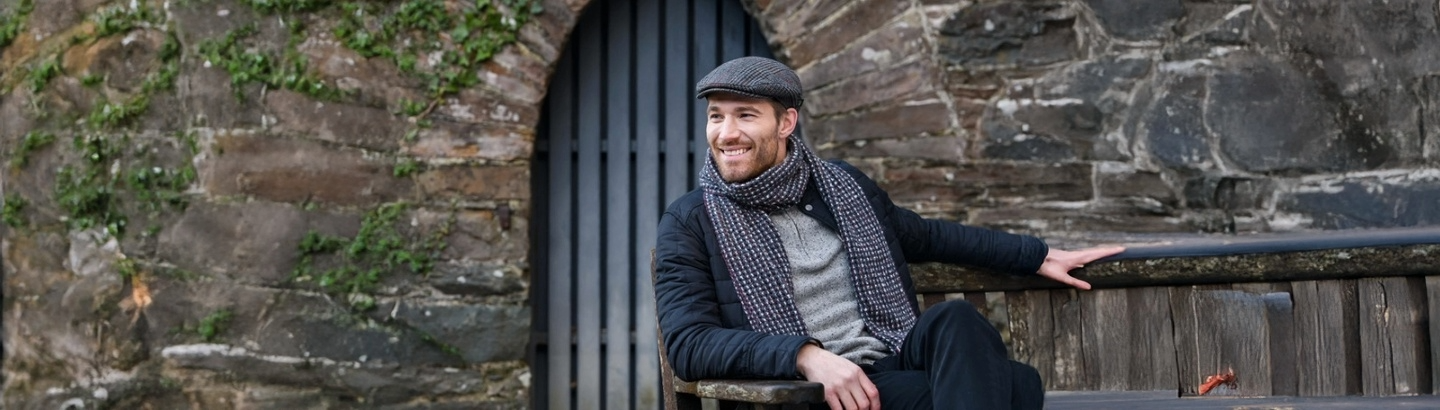
Weavers of Ireland
Ireland
An Irish tweed cap from a wide selection at fair prices

Glen Appin of Scotland
United Kingdom
Tartan and Highland-tweed caps with Scottish provenance
Stetson
United States
A reliable, well-made cap from a name everyone trusts
Common questions
- Is a flat cap the same as a scally cap?
- A scally is a type of flat cap. "Flat cap" is the broad family; "scally" is the specific eight-panel sub-style associated with Ireland and the north of England.
- What material is best for a flat cap?
- For autumn and winter, wool tweed — Donegal or Harris Tweed if you want the classics. For spring and summer, linen or lightweight cotton. Both shed light rain reasonably well.